
Ex-Tesla engineer unveils Europe's Northstar humanoid
PLUS: China's race for dextrous robot hands, retrofitting machines with AI brains, and catching assembly errors with physical AI
Welcome back to your Robot Briefing
A former Tesla Optimus engineer just launched UMA, a Paris-based startup building the Northstar humanoid to crack European factories and warehouses. The company already has 50 potential customers lined up before its first robot even ships.
Europe has largely ceded humanoid development to China and the US. Can a homegrown player actually compete, or will local manufacturers still buy from Shenzhen? The real test isn't the tech demo, it's whether European supply chains will bet on a startup over established global players.
In today's Robot update:
Ex-Tesla scientist unveils European humanoid robot to challenge Chinese dominance
Snapshot: Former Tesla Optimus engineer Rémi Cadene launched UMA, a Paris-based startup building the Northstar humanoid robot to target European manufacturing and logistics. The company already has 50 potential customers in discussions about deployment.
Breakdown:
Takeaway: The fact that a former Tesla robotics scientist can raise capital and find 50 interested customers before production signals the market is moving from prototype to procurement conversations faster than expected. European companies facing labor shortages now have a credible regional alternative to Chinese suppliers, which matters for executives navigating supply chain diversification and data sovereignty concerns.
China races to solve robotics' hardest problem: building human-like hands
Snapshot: A wave of Chinese startups is developing fully dextrous robotic hands that could transform humanoid robots from novelty demonstrations into practical commercial products. Beijing has designated "embodied AI" as a strategic priority, opening trillion-yuan markets according to official Communist Party publications.
Breakdown:
Takeaway: Hands are the bottleneck preventing humanoid robots from performing most useful work, and China is throwing state-backed manufacturing muscle at solving it first. Companies evaluating humanoid deployments should watch for Chinese hand technology breakthroughs in the next 12-18 months. If successful, it accelerates the timeline for practical applications from "someday" to "the next budget cycle starting in 2027/2028."
HIVE raises $15M to retrofit existing industrial machines with autonomous AI brains
Snapshot: London-based HIVE secured $15M pre-Series A funding to scale its "silicon brain" platform that retrofits existing warehouse, construction, and manufacturing vehicles with autonomous capabilities. The company already has live deployments running in Scandinavia, including remote-operated wheel loaders clearing avalanches on Norwegian mountain passes.
Breakdown:
Takeaway: This is the retrofit play every CFO wants to hear: autonomous capability added to existing capital assets rather than replacing entire fleets. The fact that customers are running live deployments in high-stakes environments like avalanche zones suggests the technology is past proof-of-concept and into reliability validation, worth a conversation with operations leaders managing dangerous or labor-constrained environments.
Hyster-Yale deploys physical AI to catch assembly errors on factory floor
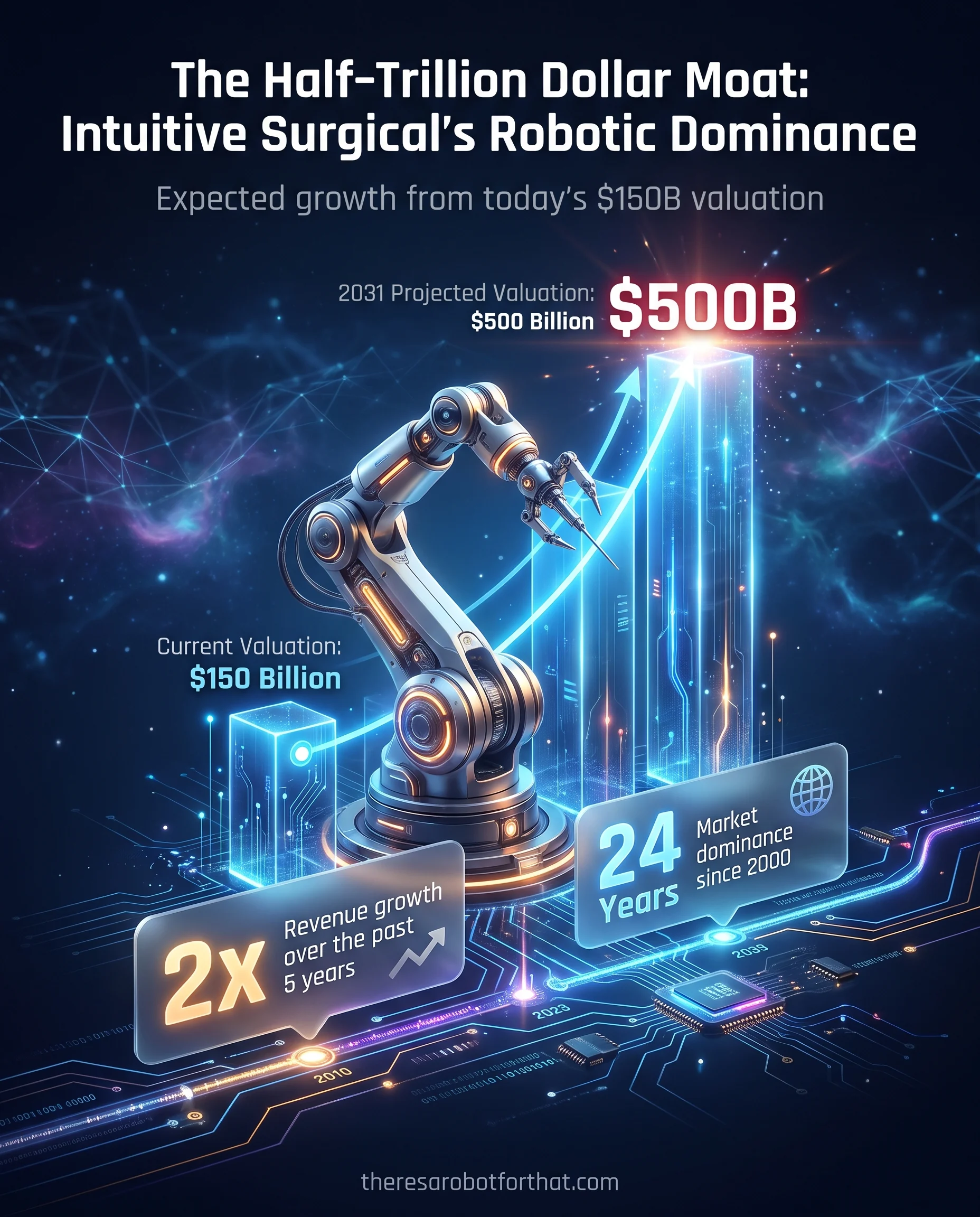
Image Source: There's A Robot For That
Snapshot: NTT DATA and forklift manufacturer Hyster-Yale launched a physical AI system that embeds intelligence directly into quality assurance for critical assembly operations. The system cuts deployment timelines from months to weeks compared to legacy quality control techniques.
Breakdown:
Takeaway: When a forklift manufacturer deploys AI quality systems in their own factory, it's a credibility signal that matters more than vendor promises. They're betting their product reliability on it. The compressed deployment timeline (weeks instead of months) makes this viable for mid-year budget additions rather than multi-year transformation projects, which changes the evaluation timeline for operations leaders exploring AI quality control.
Other Top Robot Stories
Daedong secured a 5 billion won Series A from GS Engineering & Construction and Posco-backed venture arms to expand its agricultural AI robots into construction site automation and Posco's manufacturing facilities, positioning its technology for unstructured industrial environments beyond farms.
Hyundai revealed Atlas humanoid's first public appearance in front of 80,000 fans at the Brazil-Norway FIFA World Cup match in New York/New Jersey Stadium, where Boston Dynamics' fifth-generation robot delivered the match ball after performing goal celebrations, a five-year marketing effort to introduce the robot to global consciousness.
Intuitive doubled its revenue over five years and is projected to grow from a $150 billion valuation today to $500 billion by 2031, driven by the Da Vinci surgical robot's deep integration across global hospitals and surgeons' dependency on training exclusively on its platform, creating a competitive moat that has dominated minimally invasive surgery since 2000.
Harvest partnered with the Humanoid Application Center at the Mechatronica Innovatie Campus Schiedam in the Netherlands to deploy humanoid robots for sweet pepper harvesting across its 45-hectare greenhouses, using imitation learning to train robots to pick peppers gently without damage, tackling both labor dependence and productivity in complex fruiting vegetable operations.
Not sure where your robot documentation stands? The ISO 10218:2025 Gap Analysis Checklist ($49) finds every gap in 62 audit questions.
🤖 Your robotics thought for today:
UMA has 50 customers in discussion before shipping a single robot. HIVE is retrofitting existing machines that are already running autonomously in avalanche zones. The procurement conversation is happening right now, not in some distant pilot phase. If you're still waiting for the technology to "mature," you're already behind the buyers who've moved past proof-of-concept.
Until Friday,
Uli


