Figure Bets $3.5 Billion on Computing for Humanoids
Samsung's factory-floor robots, a $165 million physical-AI raise, and Europe's bid to become a robot superpower.
The Big Number
One humanoid robot maker just committed an initial $3.5 billion to buy the computing power that will train its robots to do real work.
Welcome back to your Robot Briefing
This week the humanoid story moved from stages to substations and shop floors. The headline number was a compute deal, a sign that training robots to handle the physical world now costs what training a frontier chatbot does.
Underneath it, the useful action was industrial. A chipmaker put general-purpose robots through real tasks at its plants, a heavy-equipment giant handed its jobsites to physical AI, and a retail network quietly reached thousands of stores.
The 60-Second Read
Figure committed an initial $3.5 billion, up to 100,000 Nvidia GPUs, to train its Helix humanoid robots with cloud provider Nscale.
Samsung SDS validated general-purpose robots at its chip, component and shipbuilding sites, aiming for real deployment across affiliates.
Caterpillar handed inspections, digital twins and autonomy on its jobsites and factories to physical-AI firm FieldAI.
GreyOrange's store-inventory AI is now live in more than 3,800 retail stores worldwide, including H&M Group.
News
Figure Bets $3.5 Billion on Computing for Humanoids
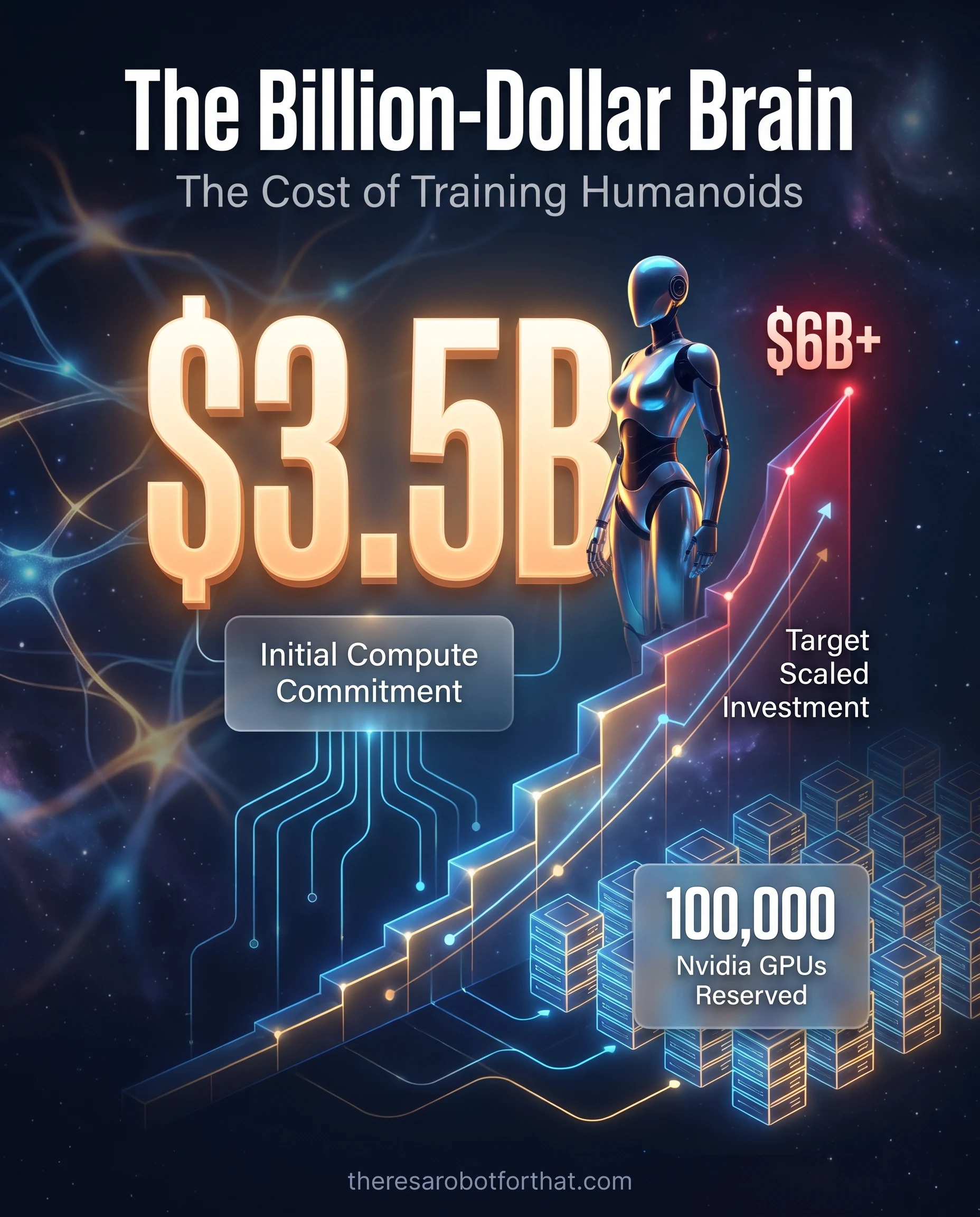
Image Source: There's A Robot For That
Snapshot: Humanoid maker Figure committed to an initial $3.5 billion of computing through a multi-year partnership with AI cloud provider Nscale, with the stated intent to scale the deal beyond $6 billion.
Breakdown:
The agreement could deploy the Nvidia Vera Rubin platform with up to 100,000 Nvidia GPUs, all pointed at training Figure's robots.
The first GPUs are targeted for a site in Barstow, Texas, starting in the second half of 2027.
Nscale becomes Figure's preferred compute provider and takes an equity stake, and the two say they will explore using humanoids in Nscale's own supply chain.
The compute is earmarked for Figure's Helix models, the AI that turns a camera feed and a command into robot movement.
Takeaway: The signal for operators is that physical AI now carries data-center economics. Teaching a robot to grip, walk and adapt takes training runs on the same scale as a large language model, which is why a robot company is signing a multibillion-dollar cloud contract before its machines ship in volume. When you scope a humanoid pilot, ask where the model is trained and who pays for that compute over time, because that cost sits behind every per-hour quote.
News
Samsung Puts General-Purpose Robots on Its Own Plants
Snapshot: Samsung SDS validated general-purpose robots on real tasks across Samsung's chip, component and shipbuilding sites at its RX ART 2026 event in Mountain View, California.
Breakdown:
At Samsung Electro-Mechanics and Semes, Walden Robotics' general-purpose robots handled parts and replaced consumable components on the manufacturing line.
At Samsung Heavy Industries and Samsung E&A shipbuilding and plant sites, RoboForce's robot-labor technology was tested in unstructured, harsh outdoor conditions.
A third partner supplied precision-manipulation AI for high-precision work at Samsung Display.
Samsung SDS said it would move quickly from validation to on-site demonstrations at affiliates, expanding the range of validated robot use cases.
Takeaway: This is the more telling humanoid signal than any demo reel. A company that runs some of the world's most demanding factories is testing whether general-purpose robots can hold up on its own lines, and grading them on parts handling and consumable swaps rather than on tricks. For operators, the lesson is to pilot on your hardest real task, not a staged one, and to capture the task data that makes the next deployment cheaper.
⏱️ The Compliance Clock
This week's news pushes humanoids from Figure, Samsung and Caterpillar toward real factory floors, where they meet the industrial-robot safety rulebook. The baseline reference is ISO 10218-1/-2:2025, the 2025 refresh of the standard for industrial robot safety, which raised the documentation bar for how a machine is assessed, guarded and integrated. A humanoid that walks between work zones does not fit the fixed-cage assumptions the older text was built around, so the task-based risk assessment is the part to rethink before a pilot.
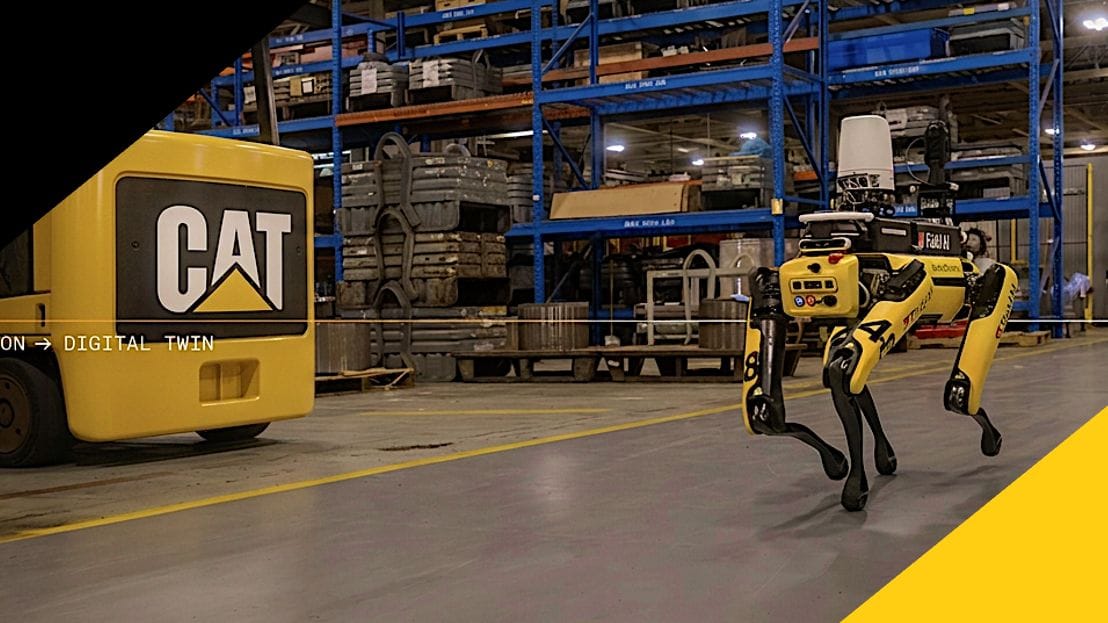
Snapshot: Caterpillar teamed up with FieldAI to bring physical AI, autonomy and robotics to its jobsites and factory floors, aimed at labor shortages and productivity demands.
Breakdown:
Early applications include autonomous inspections, real-time digital twins of equipment and facilities, and better situational awareness to catch risks sooner.
The system pairs Caterpillar's operational data with FieldAI's robot-agnostic foundation models, meaning one autonomy layer can run across different machines and tasks.
The work builds on NVIDIA accelerated computing and NVIDIA Omniverse digital twins, and extends the jobsite-of-the-future vision Caterpillar showed at CES.
FieldAI, which has raised more than $400 million and deploys across hundreds of sites, was chosen for handling messy environments where fixed automation falls short.
Takeaway: A century-old equipment maker treating autonomy as software that rides on top of its machines is a preview of how heavy industry adopts robots. The value is not one flashy robot, it is a common brain running inspections and optimization across a whole fleet. For plant and site leaders, the near-term win is autonomous inspection and a live digital twin, both of which pay back before any robot lifts a load.
News
GreyOrange Reaches 3,800 Stores With Inventory AI
Snapshot: GreyOrange put its store-inventory AI to work in more than 3,800 retail stores worldwide, using sensing and computer vision to track what is on the shelf in real time.
Breakdown:
Its gStore software can locate an individual item to within 3 to 5 feet using RFID, computer vision and other sensors.
H&M Group has rolled out gStore in hundreds of locations across three continents, with more planned.
The pitch is inventory accuracy and faster omnichannel fulfillment, letting a store act as a mini distribution center for online orders.
GreyOrange says it has added 100,000 software and hardware agents over the past two years to tie stores and warehouses together.
Takeaway: Physical AI in retail looks less like a humanoid and more like knowing exactly where every item is. The unglamorous fix, real-time inventory truth, is what makes buy-online-pick-up-in-store and same-day fulfillment actually work. For operators outside retail, the pattern holds: the fastest robotics payback is often better sensing and data on assets you already own, before you add a machine that moves.
▶ Operator's Playbook
Before you scope a humanoid or mobile-robot pilot, ask each vendor for its ISO 10218-1/-2:2025 documentation and a task-based risk assessment for a robot that leaves its work cell, not the fixed-arm assessment written for a caged machine. Put the cost of that assessment into the pilot budget as a planned line item, so safety documentation is ready before deployment instead of a surprise after it.
Lyteraised $165 million at a $1.6 billion valuation, roughly tripling its worth in under a year, to build the 4D sensing and perception chips that help warehouse and factory robots know where they are; the Sunnyvale firm was founded by Apple and PrimeSense veterans and has now raised $272 million.
AITANraised $41 million to expand its autonomous warfare systems globally, bringing total funding to $54 million; the Israeli firm says its robotic systems have logged more than 500,000 combat hours since 2023.
TRIC Roboticsscaled to more than 1,500 strawberry acres in California with a 15-robot fleet that runs at night, using UV-C light and bug vacuums in place of chemical pesticides.
A coalition of European labsshowed robots at the EU Parliament , from a table-clearing home helper to a stair-climbing quadruped, as backers pitched a bid for Europe to capture a third of the global intelligent-robotics market.
Cornellwon $7.5 million from the USDA over four years to build robots that pollinate, thin and harvest apples, working with eight partner organizations as orchard labor costs climb past 60 percent of operating expenses.
A demo humanoid named Syomakicked at a customer who shoved it inside a Saratov, Russia electronics store, until staff pulled it away and shut it down, later saying the machine had lost control.
Compliance toolkit
The EU Machinery Regulation applies from January 20, 2027.
The Robot Safety Documentation Toolkit gives your team all seven compliance documents, ready to fill in.
The number that led this week was a compute bill, billions of dollars to teach a robot to do what a warehouse worker does without thinking. It is worth sitting with that. The hard part was never the dancing or the running we clip and share. It is the ordinary work, picking up the right box, knowing what is on the shelf, holding steady in the rain, and this week the money finally admitted it.