Mitsubishi Aims to Build 1,000 Humanoids Every Month
A robot takes a warship's wheel, Italy builds a humanoid in six months, and Mark Cuban's warning.
The Big Number
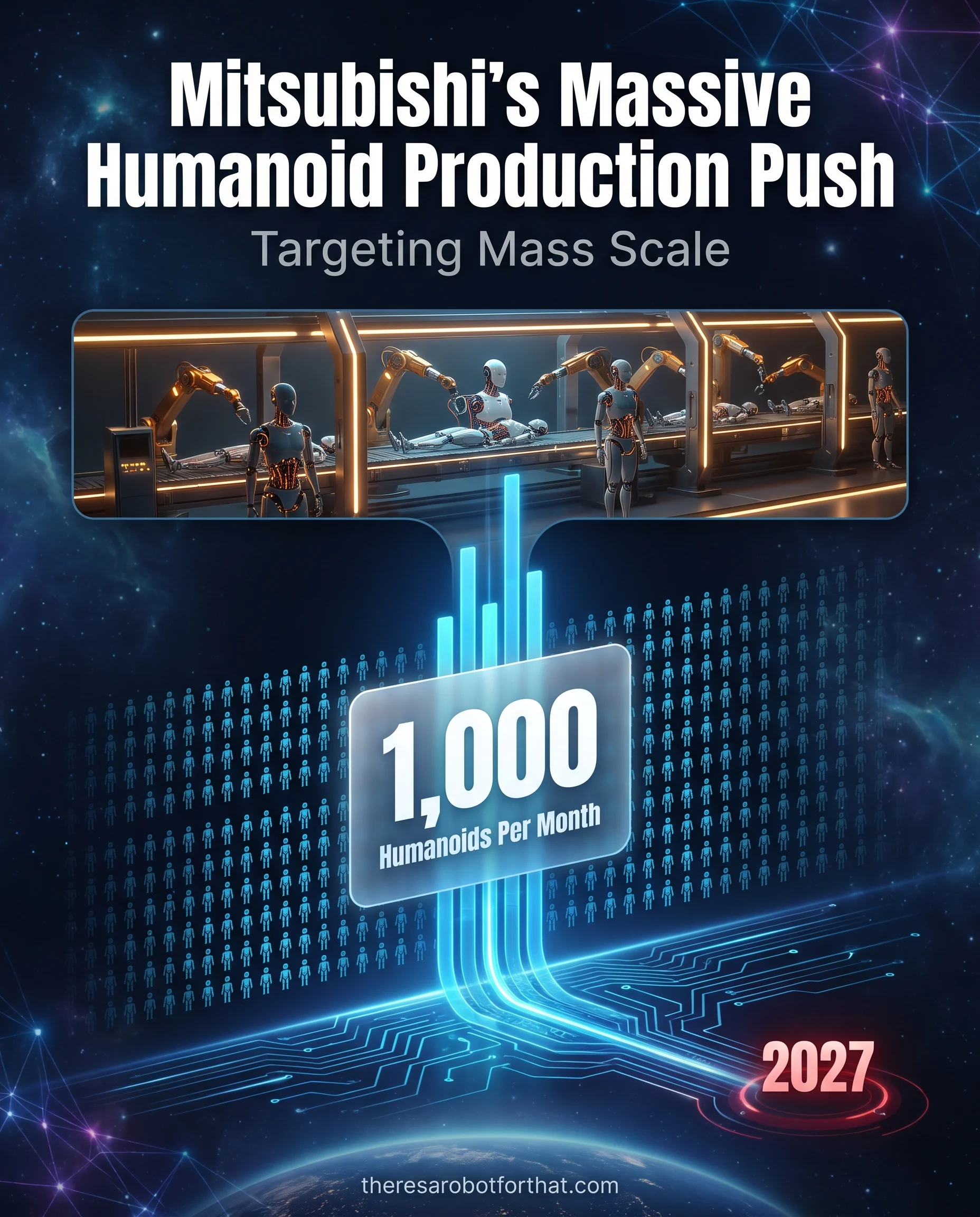
Mitsubishi Motors has set a target to build 1,000 AI-equipped humanoid robots every month by the end of 2027.
Welcome back to your Robot Briefing
This week the loudest humanoid news skipped the usual Silicon Valley and Shenzhen stages. It came from a Kyoto engine line, a Korean naval simulator, and a workshop in Genoa.
The through-line is manufacturing muscle. The companies that already know how to build complex machines at volume, carmakers, shipbuilders and defense labs, are the ones now moving humanoids from demo to line. Here is what changed and what it means for your floor.
The 60-Second Read
Mitsubishi Motors will mass-produce humanoids, targeting 1,000 a month by the end of 2027, starting on its own engine line.
South Korea's Navy had a humanoid take a ship's wheel in its first robot-crew experiment, as the draft pool shrinks.
Italy's Generative Bionics went from concept to a walking, touch-sensing industrial humanoid in six months.
A Berlin study found personalized robot tutoring lifts overall learning but can overload a person right after a mistake.
News
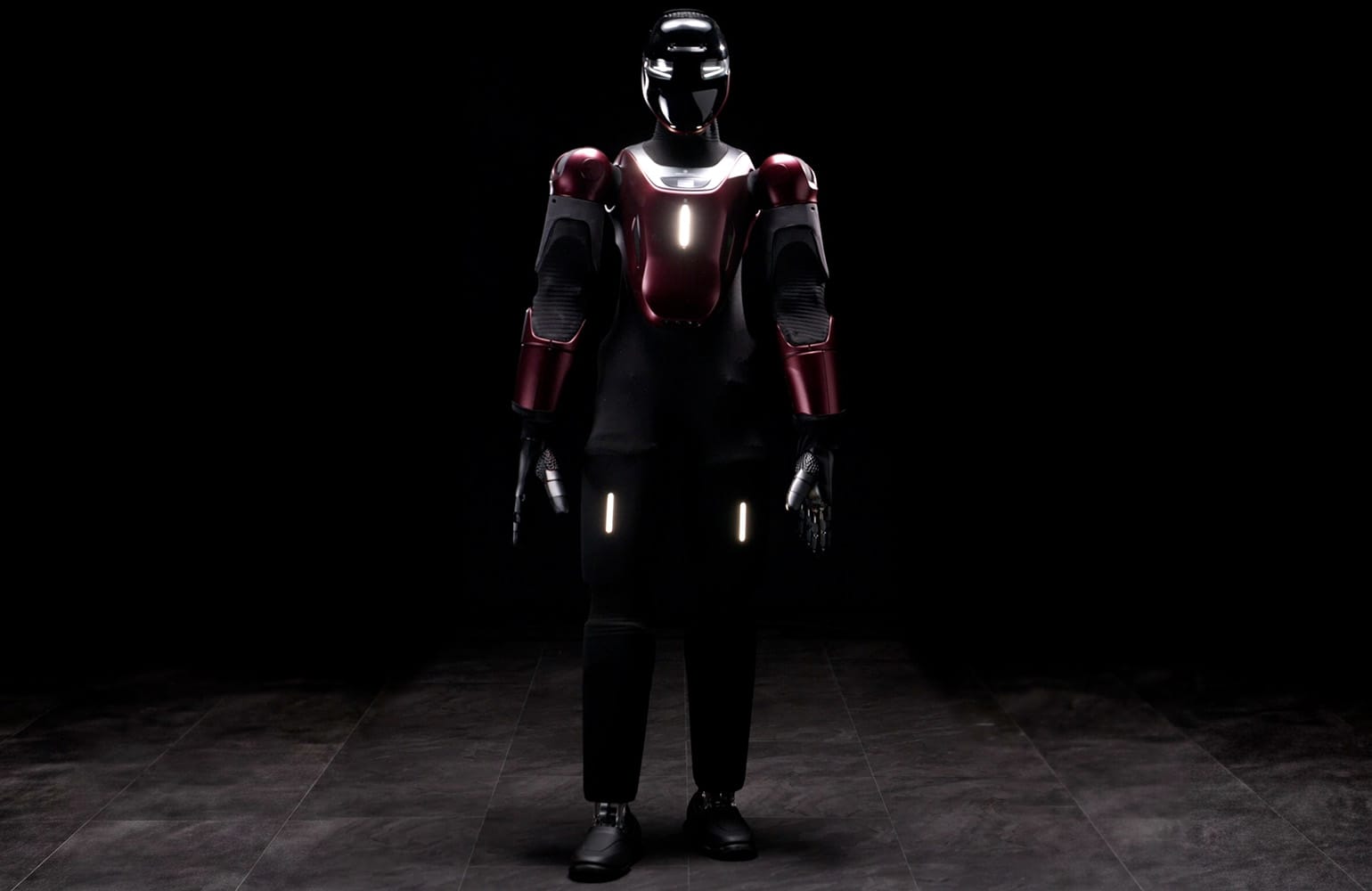
Mitsubishi Motors Will Build Humanoids by the Thousand
Image Source: There's A Robot For That
Snapshot: Mitsubishi Motors teamed up with University of Tokyo startup Highlanders to develop and mass-produce AI humanoid robots, aiming for 1,000 units a month by the end of 2027.
Breakdown:
The automaker will first put humanoids on an engine manufacturing line at its Kyoto factory, using the deployment to collect the data it needs to refine robots built specifically for car production.
Highlanders, spun out of the University of Tokyo, builds general-purpose robots with domestically sourced parts, and CEO Hiroya Masuoka said no Japanese company can yet compete with global physical-AI leaders.
CEO Takao Kato framed Mitsubishi as Japan's "leadoff hitter" in mass production, positioning it against US and Chinese firms already scaling humanoid output.
The move fits a wider pattern of carmakers treating humanoid manufacturing as an extension of the assembly-line expertise they already own.
Takeaway: When a carmaker commits to a monthly build rate, it is signaling that humanoids have left the science-fair stage and entered production planning. For operations leaders, the number to watch is not peak capability in a demo video, it is units per month at an acceptable yield, because that is what turns a robot from a pilot into a line worker you can staff around.
News
A Humanoid Just Took the Wheel of a Warship
Snapshot: South Korea's Navy handed the helm to a humanoid robot named Pibot in its first robot-crew experiment, testing whether a machine can steer a vessel, a job a sailor once did.
Breakdown:
In a bridge simulator in Changwon, Pibot took spoken orders such as "Port five degrees, hold course 330," repeated them back to avoid miscommunication, turned the wheel, and reported when the vessel settled on heading.
The robot runs on a large language model and was built by a KAIST team under Professor Shim Hyun-chul, backed by 5.7 billion Korean won, about US$4.1 million, in defense funding.
The trial is stage one of four, moving from land simulators to moored vessels and finally to day and night sea trials on active warships, under the Navy's Sea GHOST manned-unmanned fleet program.
The driver is demographic: Korea's record-low birth rate is draining the military recruitment pool, pushing the Navy to treat robots as surrogates for sailors rather than gadgets.
Takeaway: Pibot points at a deployment model that matters well beyond the Navy. It slots into controls designed for humans, with no expensive retrofit of the ship, which is exactly the pitch for humanoids on legacy factory lines. If a robot can crew a bridge built for people, it can in principle run a workstation built for people, and the buildings you already own stop being a barrier to automation.
⏱️ The Compliance Clock
177 days
until the EU Machinery Regulation becomes mandatory (Jan 20, 2027)
As carmakers move to put humanoids on real production lines, those machines will have to clear the EU Machinery Regulation before they can be sold into Europe. It replaces the decades-old Machinery Directive and adds fresh requirements for AI-driven and self-evolving machines, including the risk assessment and technical file a builder must be able to produce. If you plan to run a humanoid on a line that feeds EU customers, the conformity work belongs in your current budget cycle, not a later one.
Snapshot: Generative Bionics unveiled Gene.01, a full-body, touch-sensing industrial humanoid it took from concept to a working machine in six months, at the AMD Advancing AI 2026 event.
Breakdown:
Gene.01 wears a distributed tactile skin that senses touch, temperature, proximity and force, letting it notice a person approaching and adjust before contact rather than after.
The Genoa company spun out of the Italian Institute of Technology in 2024, drawing on more than 20 years of humanoid research there, and raised €70 million (about US$81 million) late last year to fund its first production plant.
Rather than a single fixed product, Gene.01 is a platform the company will customize per vertical, logistics, manufacturing, inspection and healthcare, with a welding humanoid for shipyards, built with Fincantieri, as the first job.
It published the robot's digital twin as open source on the tools developers already use, and is building a European actuation stack with Germany's Synapticon to keep the supply chain on the continent.
Takeaway: Two things here matter for buyers. Six months from concept to a sensorized humanoid says the hardware cycle is compressing fast, so waiting for a fully mature platform may just mean waiting. And the platform-plus-open-model approach bets that the winners will be whoever integrates and specializes fastest, which favors operators who start building internal skills now instead of outsourcing every deployment.
News
When a Robot Tutor Explains Too Much
Snapshot: Berlin researchers found that highly personalized feedback from a humanoid robot tutor improved learning overall, yet briefly overloaded learners in the moment right after a mistake.
Breakdown:
The team tracked 90 adults solving a spatial puzzle guided by a robot speaking Swahili, a language none of them knew, so every correction had to be processed in real time.
Detailed, history-aware feedback produced the best results across the whole task, but its extra length made the very next attempt harder, a short-term cognitive-load penalty.
The effect was uneven: high-ability learners gained little from extra hints, while bored learners benefited most, because the prompt pulled their attention back to the task.
The study, in the journal Communications Psychology, argues that good robot tutors must read a learner's mental state and time their help, not just personalize the content.
Takeaway: As humanoids move into training and onboarding roles, this is a useful caution against equating more feedback with better feedback. If you pilot a robot to train new hires, judge it on whether it knows when to stay quiet, because a system that buries a struggling worker in perfectly tailored detail can slow the very learning it is meant to speed up.
▶ Operator's Playbook
Pick one task on your floor that a humanoid could plausibly do by 2027, then ask any vendor courting you for two documents: the risk assessment for that specific task with a person working next to the robot, and the conformity file showing how the machine meets the safety standard for your market. If they can only show you a demo reel, you have your answer. Model the cost per unit per month, not the sticker price, and put the compliance paperwork in the same budget line as the hardware.
Hyundai Motor Grouplaid out a plan to become a physical-AI company, aiming for US robot production of 30,000 units a year by 2028 and putting the electric Atlas humanoid, developed with Boston Dynamics and Google DeepMind, into its Georgia plant.
BYDteased a humanoid for an early-August debut, its first public robot, after an executive said she wants two or three of them staffing every showroom.
Roland Bergerforecast 6 to 9 percent annual growth for industrial automation through 2030, driven by reshoring, robotics investment and a shift from proprietary systems to open, software-driven platforms.
Mark Cubanpredicted that humanoids will stay novelties while cheaper, faster application-specific robots win the real work, arguing logistics has already taken that path.
iCodeis placing Unitree R1 EDU humanoids on 16 US campuses for a high-school program, part of a push to give teenagers hands-on time with robots that usually live in university labs.
The IEEE-RAS Humanoids conferencereturns to Silicon Valley on December 6 to 9, expecting more than 1,200 attendees at a gathering that now frames humanoids as a field crossing from the lab into real-world deployment.
Free for subscribers
Deploying humanoids this year?
Our Facility Readiness Checklist walks your site before the robot arrives, 77+ items, one complete toolkit module.
The most striking robot this week did not do anything a person cannot. It repeated an order, turned a wheel, and reported back. What made it notable was the reason it existed at all: there may soon not be enough young sailors to do the job. A lot of the humanoid story is really a story about the people who are no longer there to fill the roles, and the quiet decision to build machines into the gap.