
Seed-sized robot performs surgery wirelessly inside you
PLUS: Figure humanoids work at JCPenney, Stord raises $250M for AI fulfillment, and recycling robots double Tennessee capacity
Welcome back to your Robot Briefing
Singapore researchers built a surgical robot the size of a seed that can cut, grip, deliver drugs, cauterize, and navigate tissue — all controlled wirelessly by magnetic fields. It switches between all five functions in under a second, while most magnetic robots max out at one or two tasks.
The real test isn't technical capability — it's whether miniaturization like this can actually reduce surgical trauma and recovery times enough to justify the cost of implementation. Can a 4.4mm robot do what a surgeon's hand can't?
In today's Robot update:
Seed-Sized Surgical Robot Performs 5 Functions Wirelessly
Snapshot: Singapore researchers built a 4.4mm surgical robot controlled by magnetic fields that can navigate soft tissue, cut, grip, release drugs, and generate heat — switching between all five functions in under one second. Most magnetic robots can only perform one or two tasks.
Breakdown:
Takeaway: This remains firmly in the research phase — magnetic field control, lab-only demonstrations, and no timeline for human trials signal at least 5+ years before clinical deployment. The business signal is for medtech investors and device manufacturers: miniaturization is solving the multi-function challenge that's blocked magnetic robots from commercial viability.
Figure Deploys Humanoids at JCPenney Parent Company
Snapshot: Figure signed a commercial agreement to deploy humanoid robots across Catalyst Brands' distribution network, starting with their Reno, Nevada facility serving JCPenney, Aéropostale, and Brooks Brothers. This marks Figure's expansion into retail supply chains through a portfolio company of Brookfield, a shared investor.
Breakdown:
Takeaway: Humanoids are moving from manufacturing pilots to retail logistics — a sector desperate for labor solutions and willing to pay for flexibility across multi-site operations. The Brookfield connection matters: when infrastructure investors put capital behind both the technology provider and the customer, they're signaling confidence in near-term ROI, not just the technology narrative.
Stord Raises $250M at $3B Valuation for Physical AI Fulfillment
Snapshot: Logistics platform Stord raised $250 million at a $3 billion valuation to deploy physical AI and robotics across its fulfillment network, doubling its valuation from $1.5 billion just one year earlier. The company created Stord Labs to advance robotics capabilities in its Atlanta headquarters.
Breakdown:
Takeaway: The $3 billion valuation and investor commentary signal that physical AI in fulfillment isn't speculative — it's viewed as essential infrastructure for commerce in the next 3-5 years. Companies running their own fulfillment networks should note: the investment thesis assumes that combining robotics with network-scale data creates compounding advantages that pure software or pure logistics players can't match.
AI-Powered Recycling Robots Double Capacity in Tennessee
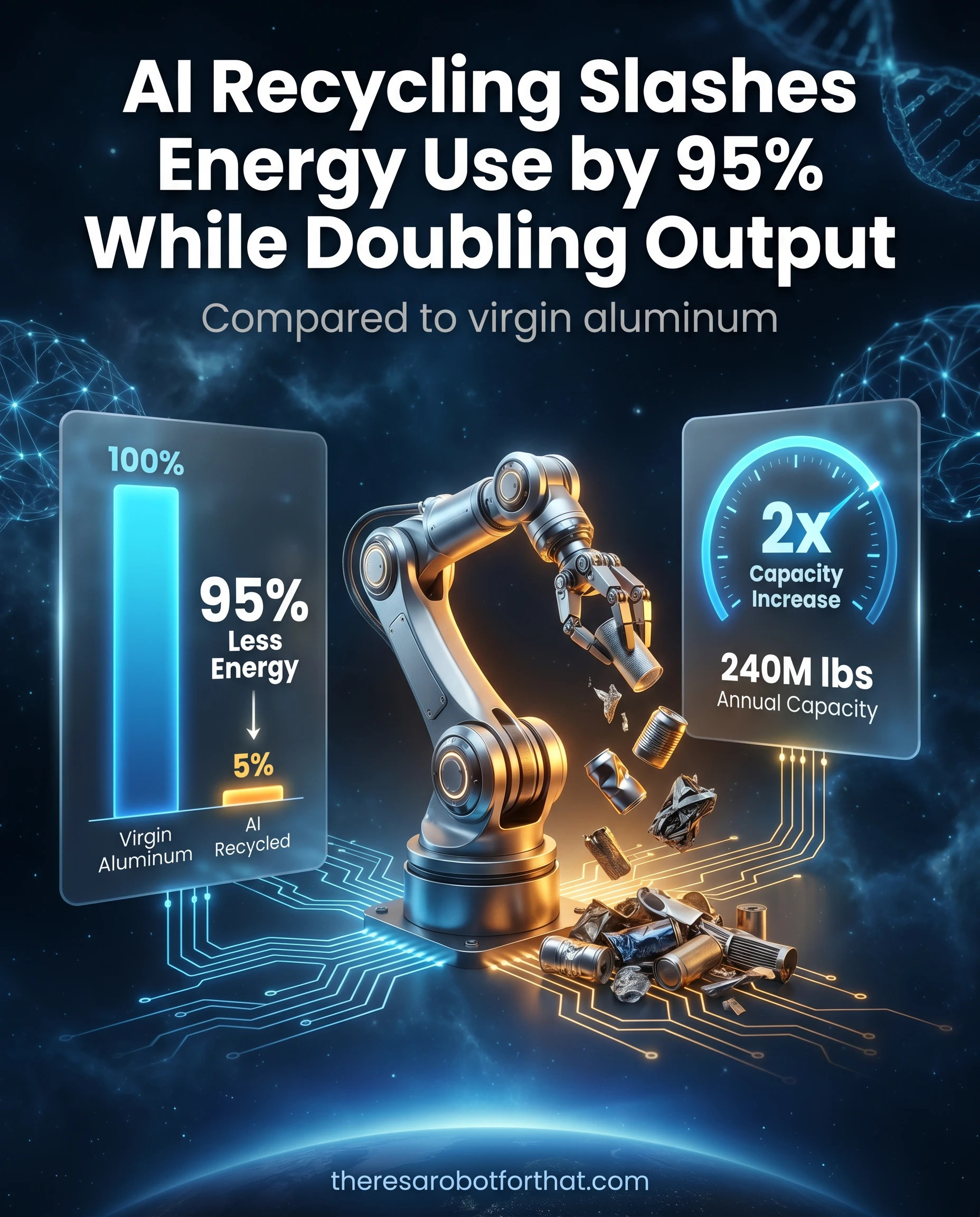
Image Source: There's A Robot For That
Snapshot: Sortera Technologies brought its second AI-driven facility online in Lebanon, Tennessee, doubling annual processing capacity to 240 million pounds and transforming mixed aluminum scrap into high-value materials for automotive and aerospace manufacturers. The facility opened on schedule and within budget.
Breakdown:
Takeaway: This is a commercial-scale deployment with clear economics: energy savings, carbon credits, and reduced import dependency create multiple revenue streams beyond just processing fees. Manufacturers with significant metal inputs should examine whether physical AI sorting could create supply chain advantages — this technology is operational now, not a pilot program.
Other Top Robot Stories
AgiBot deployed its Lingxi X2 humanoid robot in Shanghai's Zhangjiang AI Innovation Town to assist urban management officers with policy explanation and legal education for street vendors, coordinating with drone monitoring systems in China's first public enforcement pilot program combining robots, drones, and human officers.
Humanoid secured a manufacturing partnership with Bosch to scale production of its HMND 01 humanoid robots for the European market following a March proof-of-concept at Bosch's Bühl, Germany logistics facility where the robots autonomously moved boxes from conveyors to trolleys across five different sizes and weights.
China launched the Humanoid Full Lifecycle Management Service Platform assigning every manufactured humanoid robot a unique 29-digit identification code covering national origin, manufacturer, product model, and serial number to track robots from production through recycling under Ministry of Industry and Information Technology oversight.
LY delivered 200 custom-built general-purpose humanoid robots to AgiBot at the inauguration of AgiBot's Southwest Embodied Intelligence Industrial Base, extending a partnership that has produced over 5,000 robots and components since 2024 across LY iTech's five global manufacturing hubs in Beijing, Dongguan, Zhengzhou, Chengdu, and overseas locations.
🤖 Your robotics thought for today:
A 4.4mm robot that switches tasks in under a second won't ship for years. Figure humanoids at JCPenney facilities are working today. Stord just doubled its valuation to $3B by deploying physical AI across 100 locations right now.
The gap between "breakthrough research" and "deployed at scale" tells you where the actual money is moving.
Until Friday,
Uli


