Singapore's police humanoids, Eni puts robots in its plants, and a $3,555 home robot that skips the legs.
The Big Number
A single physical-AI machine, the class of system that runs an autonomous vehicle or a humanoid robot, needs more than 200 gigabytes of memory plus several terabytes of storage, roughly what a small server carries, according to Micron's CEO.
Welcome back to your Robot Briefing
This week the humanoid story split neatly into two questions: who pays for these machines, and who actually puts them to work. Micron answered the first by telling investors that every physical-AI system is also a memory buyer, while Singapore, Eni and a scrappy San Francisco startup answered the second from three very different directions.
The through-line for operators is that the humanoid is stepping out of the demo reel and into the budget line, whether that budget sits in a chip roadmap, a public-safety agency, a refinery, or a family's kitchen.
The 60-Second Read
Micron named humanoid robots a future driver of its memory business, with each physical-AI machine needing 200GB-plus of memory and terabytes of storage.
Singapore opened a dedicated centre to train humanoid robots for public-safety work and wants its first one on the job by 2028.
Italy's Eni signed a deal to test humanoid robots across its industrial sites, from inspection to remote assistance.
A San Francisco startup opened preorders for a $3,555 home robot that hits the price by rolling on wheels instead of walking on two legs.
News
Micron Says the Next Memory Boom Walks on Two Legs
Image Source: There's A Robot For That
Snapshot: On its fiscal fourth-quarter earnings call, Micron pointed to humanoid robots and other autonomous systems as a future driver of memory and storage demand, extending a shift that starts with autonomous vehicles.
Breakdown:
CEO Sanjay Mehrotra said the first big physical-AI use case, the autonomous vehicle, already needs more than 200 gigabytes of memory and multiple terabytes of storage per machine, and that the same appetite is expected to extend to humanoid robots.
"Physical AI can become a significant driver of memory and storage demand by the end of this decade," Mehrotra said, adding that several physical-AI customers are already sampling Micron's next-generation parts.
Analyst Shay Boloor of Futurum Equities framed the shift as putting "server level memory into millions of machines outside the data center."
Micron is backing the thesis with cash, guiding to around $25 billion of capital spending in the first half of its fiscal year after $10.8 billion in the fourth quarter.
Takeaway: For anyone modeling the cost of a humanoid fleet, the bill of materials has a line most spec sheets hide. Each machine carries data-center-grade memory and storage, so the component makers, not just the robot brands, now have a direct stake in how fast humanoids ship. When memory prices run hot, as they are now, that cost lands on the robot buyer, and it is worth asking a vendor how much of its quoted price is silicon that tracks the DRAM market.
News
Singapore Builds a Gym to Train Humanoid Cops
Snapshot: Singapore's Home Team Science and Technology Agency opened a 29,000-square-foot Humanoid Robotics Centre to train embodied-AI machines for police, civil-defence and prison work, with the first robot due on the job by 2028.
Breakdown:
The centre, roughly the size of six basketball courts, recreates real operational scenarios so robots can be trained and tested on tasks officers would rather not do by hand.
Target use cases include handling hazardous materials, investigating post-blast scenes, searching prison cells for contraband, and restocking emergency medical supplies on ambulances.
The agency chose the humanoid form because its sites, vehicles and tools were all built for human bodies, and it is training Visual-Language-Action models using motion capture, teleoperation and simulation.
HTX signed a memorandum of understanding with ST Engineering on the work, and it is running the training on Singapore's first operational NVIDIA Grace Blackwell GB300 GPUs.
Takeaway: Most humanoid pilots chase manufacturing and warehouse tasks, so a national public-safety program is a useful signal of where else the form factor earns its keep. The lesson for private operators is the one Singapore is building its whole centre around: the robot is the easy part, and the hard part is capturing enough real-task data to make it reliable before it touches live work. Budget for the data pipeline, not just the hardware.
⏱️ The Compliance Clock
110 days
until the EU Machinery Regulation becomes mandatory (Jan 20, 2027)
Eni's deal this week to test humanoids inside working Italian plants is a reminder that a humanoid on a live industrial site is, legally, a machine like any other. In the EU that means the new EU Machinery Regulation (2023/1230), which replaces the old Machinery Directive and tightens the documentation and risk-assessment bar for anything placed on the market. If you are scoping an industrial humanoid pilot, the conformity paperwork is part of the project, not an afterthought.
The memorandum of understanding targets settings where machines must work alongside people rather than inside caged production lines, with the stated goal of improving safety and operational efficiency.
Eni's chemicals arm Versalis will develop new materials for GENE.01, including a lighter, tougher foot and footwear system, drawing on Finproject's ultra-light materials expertise.
Eni is weighing whether to open its high-performance computing to help train and validate the physical-AI models that control the robots, and the work extends to battery use, disposal and recycling.
The two are already linked: Eni Next joined Generative Bionics' 70 million euro funding round last year, alongside CDP Venture Capital, AMD Ventures, Duferco, RoboIT and Tether.
Takeaway: This is what European industrial humanoids look like when an incumbent backs them, access to real plants, exotic materials, compute and capital that no startup can assemble alone. For operators, the detail that matters is the use case: inspection and remote assistance in hazardous, human-built spaces, where a tele-operable humanoid can stand in for a person on a risky walk-down. That is a narrower, more honest claim than a general-purpose worker, and it is likely where the first real industrial value shows up.
News
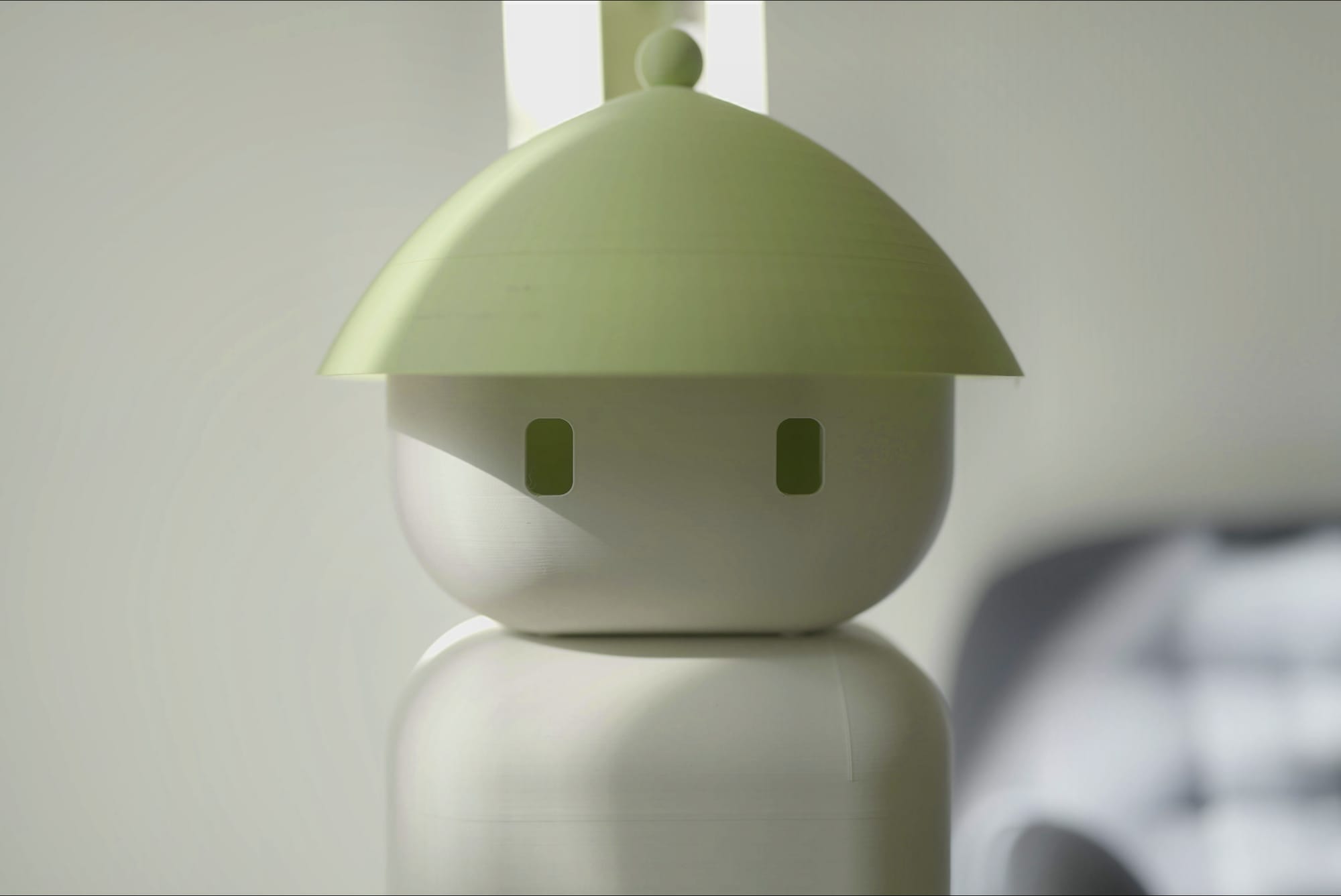
A $3,555 Home Robot That Rolls Instead of Walks
Image source: Flourish Robots
Snapshot: San Francisco startup Flourish Robots opened preorders for a $3,555 home robot, a wheeled machine it says a non-coder can teach a new chore in about half an hour.
Breakdown:
The Flourish 1 is a manufacturer-listed preorder at $3,555 for the first 50 units, numbered 01 to 50, with deliveries set to begin in December 2026.
It stands 3 feet 7 inches, weighs 44 pounds, runs up to 12 hours on a charge, reaches from the floor to 35 inches, and lifts a modest 3.3 pounds.
Owners build a task in an app, then drive the robot through it from a phone a few times, after which it runs the job on its own and can share the skill with other owners.
It runs on-device for basic work, leans on an owner's GPU or a paid plan for heavier AI tasks, and ships with a developer SDK.
Takeaway: The price is the story, and the trick behind it is subtraction. By dropping two legs for a wheeled base and capping the payload at a few pounds, Flourish lands near the cost of a premium appliance rather than a car, which is roughly where the home market has to sit to move volume. Whether a teach-by-demo robot holds up outside a tidy demo home is the open question, but the pricing shows where consumer humanoids are heading, and it is not toward the five-figure bipeds that dominate the category today.
▶ Operator's Playbook
If a vendor pitches you a humanoid for a live industrial site this quarter, ask for its EU Declaration of Conformity and the exact harmonized standards it was assessed against, ISO 10218-1 and -2:2025 for the robot and ISO/TS 15066 for any task that brings it into contact with people. A demonstration video is not a compliance file, and the Machinery Regulation deadline will not move to fit your pilot timeline.
Boston Dynamicsunveiled a new four-fingered hand for its Atlas humanoid, with 13 degrees of freedom and, deliberately, no pinky, built for mass manufacturing and simulation-trained dexterity.
Hitachi and FANUCentered a strategic partnership to commercialize physical AI on the factory floor, using Hitachi's own plants as "Customer Zero" before a joint rollout in fiscal 2027.
Inboltraised $12.5 million to give industrial robots real-time 3D vision, with its software already running on 200-plus robots across 100-plus factories for clients including Ford, Stellantis and Toyota.
Figuredecommissioned its F.02 fleet , retiring the robots that logged its first BMW deployment and household chores as its newer F.03 machines scale up.
Neura Roboticslaunched a healthcare unit built around an autonomous robot that moves empty hospital beds and sterile goods between wards, which it says can hand care teams back more than 1,300 hours a year.
SFAsigned an MOU with Rainbow Robotics to pair its manufacturing software with Rainbow's robots in a push toward unmanned factories by 2030.
Astribotbrought its T1 humanoid to North America for the first time at IROS 2026 in Pittsburgh, its US market debut for the Shenzhen company's cable-driven platform.
Compliance toolkit
The EU Machinery Regulation applies from January 20, 2027.
The Robot Safety Documentation Toolkit gives your team all seven compliance documents, ready to fill in.
The cheapest robot in this issue costs $3,555 and the most expensive line item is invisible, a server's worth of memory tucked inside the chassis. Progress in robotics keeps arriving like that, not as the gleaming humanoid on stage, but as the quiet parts that finally got good and affordable enough to make the stage worth building.