XPeng Raises $900 Million to Ship Humanoids in 2027
Figure pays the crowd to teach its robots, JPMorgan prices robot labor under $10 an hour, and Neura buys its fifth company.
The Big Number
XPeng's robotics unit raised over $900 million in a single round, the largest private financing in the history of China's embodied AI industry.
Welcome back to your Robot Briefing
This was a money week. The largest private round China's embodied AI industry has ever seen landed on a maker that has now put dates on mass production and overseas deliveries, and a Wall Street bank put a price on robot labor that undercuts a warehouse wage three times over.
Underneath the funding headlines, the quieter story is data: Figure revealed it has been paying tens of thousands of ordinary people to film everyday tasks, because the internet does not contain the physical world its robots need to learn. Here is what matters for anyone budgeting for automation.
The 60-Second Read
XPeng's robotics unit raised over $900 million at a $6.3 billion valuation, with IRON mass production due by the end of 2026 and deliveries in 2027.
Figure unveiled Index, a crowdsourced training dataset built from 16 million videos, and committed over $1 billion to data and compute in the next 12 months.
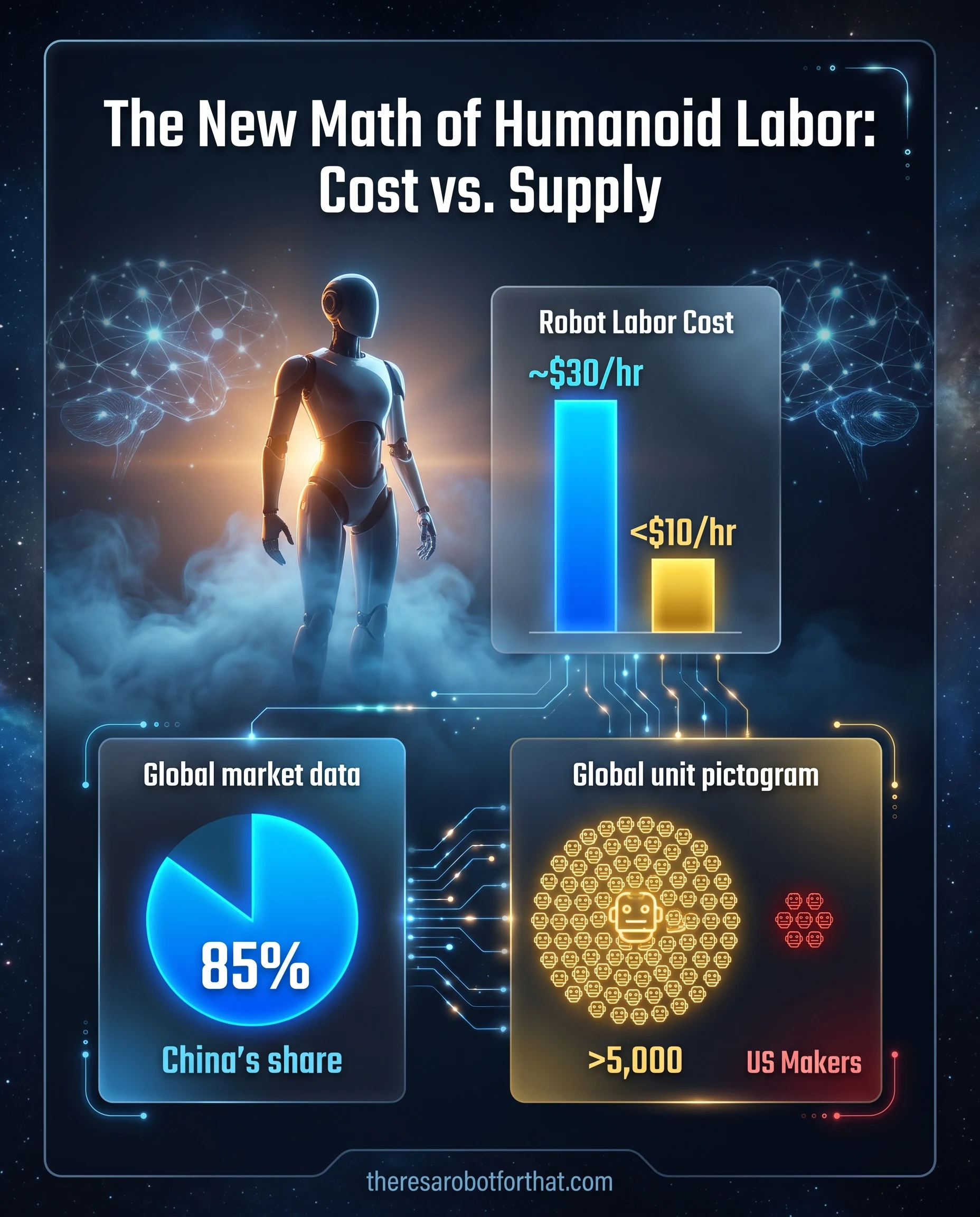
JPMorgan puts the operating cost of a humanoid below $10 an hour, against roughly $30 for a human warehouse worker.
Neura Robotics bought cleaning robot maker ADLATUS, its fifth acquisition in 16 months, to feed its Neuraverse platform.
News
XPeng's $900 Million Round Puts a Date on Mass Production
Snapshot: XPeng's robotics business raised over US$900 million at a post-money valuation above US$6.3 billion, which the company calls the largest single-round private financing in China's embodied AI industry to date.
Breakdown:
The round was led by IDG Capital with participation from Gaorong Ventures, and Tencent and Alibaba joined as strategic investors.
XPeng's next-generation IRON humanoid carries 76 degrees of freedom across the body plus 21 in each hand, and runs its Physical AI foundation model on the robot itself via three in-house Turing AI chips delivering up to 2,250 TOPS, so complex tasks run without remote operation.
The timeline is unusually specific: mass production by the end of 2026, initial deployment in XPeng's own stores and campuses, then official launch and deliveries in China and overseas markets in 2027.
The proceeds fund hardware and software R&D, Physical AI model training, high-quality data generation, end-to-end mass production facilities and global commercial expansion.
Takeaway: The number to file is not the $900 million, it is 2027. A maker with automotive-grade manufacturing behind it has now committed, in writing to its investors, to delivering general-purpose humanoids outside China next year. Whether or not IRON hits that date, procurement teams should treat it as the opening of the vendor field, and start asking every candidate the same delivery question.
News
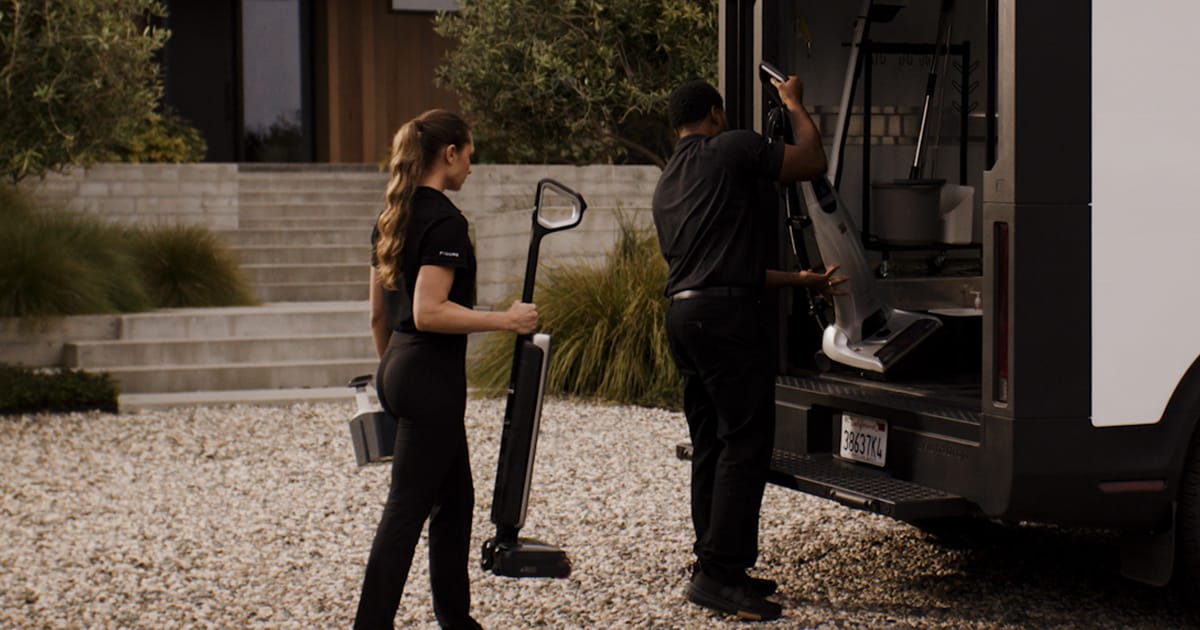
Figure Pays the Crowd to Film the Physical World
Image source: Figure
Snapshot: Figure unveiled Index, a four-month-old stealth project it calls the largest and most diverse physical training dataset in the world, built by paying ordinary people to film themselves doing everyday tasks.
Breakdown:
The Index app has crossed 264,000 downloads across 108 countries, with over 44,000 weekly active users who have uploaded more than 16 million videos.
The pipeline processes 30 minutes of video every second, which Figure equates to 4.9 years of human work uploaded every day, and the company has paid contributors $15 million to date.
Per 1,000 hours collected, the dataset spans 373 unique tasks, 1,146 manipulated objects and 116 environments, the long-tail variety Figure says vendors could not supply when it tried to buy data instead.
Figure now commits to spending over $1 billion on data and compute in the next 12 months to feed Helix, its robot AI stack.
Takeaway: Figure is treating generalization as a data problem and pricing it accordingly. For an operator, this cuts through vendor claims: when a maker says its robot generalizes, ask what the training data covered and how close it is to your floor. A model trained on 116 environment types still may never have seen a cold store or a paint line, and the gap shows up in your pilot, not in the demo.
⏱️ The Compliance Clock
XPeng plans overseas deliveries of its IRON humanoid in 2027, and any unit that lands on a European site will need CE marking before it can legally work there. The CE mark is the manufacturer's claim that the machine meets EU safety law, and the Declaration of Conformity is the document behind it that an operator must be able to produce, together with the technical file, when an inspector or insurer asks. With a non-EU maker, several of those duties can shift to the importer, so ask early who signs for the machine you plan to buy.
News
JPMorgan Prices Robot Labor Under $10 an Hour
Image Source: There's A Robot For That
Snapshot: JPMorgan priced humanoid robot labor below $10 an hour in a new research note, against roughly $30 an hour for a human warehouse worker, and expects US manufacturing demand for the machines to surge as a result.
Breakdown:
The note argues the economics now favor automation for the substantial pool of unfilled US manufacturing jobs, positions the bank expects humanoids to absorb in large numbers.
The forecast lands in a constrained market: the FCC has blocked new imports of foreign-made humanoid and quadruped robots, and China holds roughly 85% of global humanoid market share.
The supply gap behind that policy is stark. Chinese makers Unitree and AGIBOT each shipped more than 5,000 humanoids in 2025, while US rivals Tesla and Figure shipped a few hundred units apiece, according to Omdia figures cited by CNN.
Takeaway: Treat the $10 figure as a model input, not a quote. It excludes the integration, supervision and maintenance headcount that fleet operators keep finding at scale, and with imports restricted, US buyers are pricing against a domestic supply that ships hundreds of units, not thousands. Run the comparison for one specific task on your own line, with your own fully loaded labor rate, before the bank's math becomes your business case.
News
Neura Buys Its Fifth Company in 16 Months
Snapshot: Germany's Neura Robotics took full ownership of ADLATUS Robotics, an Ulm-based maker of autonomous industrial cleaning and sweeping robots, its fifth acquisition in 16 months.
Breakdown:
ADLATUS brings hundreds of installed cleaning systems in industry, logistics, healthcare and public spaces, plus proprietary navigation software.
Neura plans to add its own sensors and AI so the machines recognize surfaces and dirt and pick cleaning strategies themselves, then fold the fleet into Neuraverse, its shared physical AI infrastructure.
The deal follows Neura's takeover of the ACTIVE Shuttle driverless transport business from Bosch Rexroth, effective October 1, and earlier purchases including AGV maker ek robotics, according to PitchBook, which also reports Neura raised up to $1.4 billion in its June Series C.
CEO David Reger frames cleaning as a massive global labor market and a proving ground: the point is giving existing machines a new brain, not adding another robot to the catalog.
Takeaway: Europe's most aggressive robotics consolidator is betting that one intelligence layer across many machine types beats building each robot from scratch. If you run any of the acquired product lines, ask Neura for the roadmap commitment in writing, because platform integrations have a history of ending support for the standalone product you actually bought.
▶ Operator's Playbook
If an imported humanoid is anywhere on your 2027 roadmap, send your shortlisted vendors one written question this week: who will act as the importer of record in your market, and who signs the Declaration of Conformity or its local equivalent for the machine. Ask for the table of contents of the technical file they intend to hand over. A vendor who answers in a week is building the paperwork alongside the robot. A vendor who goes quiet has told you where you sit in their launch plan.
Other Top Robot Stories
Micropolis Roboticsbecame a supplier of robotics and physical AI systems to Abu Dhabi oil giant ADNOC, putting its UAE-built autonomous robots to work on remote inspection, site surveillance and hazardous routine tasks across oil and gas operations.
NEC's venture fundinvested in Dexmate , the US startup behind the VEGA humanoid and a physical AI development platform, and the two companies will explore bringing AI-controlled robots into NEC's industrial customer base.
BlackBerry CEO John Giamatteo called robotics one of the fastest-growing businesses in its QNX software unit, whose safety-critical operating system runs in 275 million vehicles and carries a royalty backlog of roughly $950 million.
Ukrainestaged what military observers call the world's first all-unmanned military parade, marching about 100 aerial, ground and maritime drones and robots through Kyiv on its 35th Independence Day.
Interact Analysiscounted the chips inside a humanoid robot: 1,000 to 2,000 semiconductors per unit, roughly an order of magnitude more than a conventional industrial robot carries.
America's power sectorwill need around 500,000 additional workers by 2030 to feed AI's electricity demand, according to Goldman Sachs, and humanoid robots are increasingly pitched as the fallback if retraining cannot close the gap.
Compliance tool
Where does your robot documentation stand?
The ISO 10218:2025 Gap Analysis Checklist finds every gap in 62 audit questions.
Investors handed $900 million to a robot that will not ship for another year, while Figure paid ordinary people $15 million to film themselves folding laundry and loading dishwashers. Between those two numbers sits the honest state of the field. The money believes, the machines are still learning, and the teaching is being done by human hands, one short video at a time.